

Whatever you’re looking to grow, a greenhouse is a brilliant tool to get your growing started and thriving. Tons of sunlight, a carefully controlled atmosphere and plenty of space for anything smaller than a tree. Greenhouses are a ubiquitous tool for growing greenery, but have you ever wondered how exactly a greenhouse works?
Alright, so its actually pretty simple; glass helps to catch sunlight for warmth and protects plants from the elements, but there is a bit of nuance to it and how it helps plants which it never hurts to understand.
What is a Greenhouse?
Let’s cover the basics first: a greenhouse is an enclosed structure with transparent walls and a roof, typically made from glass. These materials allow sunlight to enter and help to retain heat inside the building. Unlike growing outdoors, where plants can be exposed to fluctuating temperatures, heavy rain, even frost in the winter, a greenhouse provides a much more stable environment. This makes it easier to control growing conditions and protect delicate plants throughout the year.
You can get greenhouses in a range of materials, though we naturally recommend wood and glass – and we can explain why below!
How Does a Greenhouse Trap Heat?
As you already know, the glass is the key here but the specifics are actually quite interesting. The sun’s rays begin as shortwaves carrying UV and light, as they hit shelves, pots, soil and other surfaces inside the greenhouse, that energy is absorbed which causes the waves to lengthen as they lose energy, slowing down, and turning them into infrared which then becomes heat.
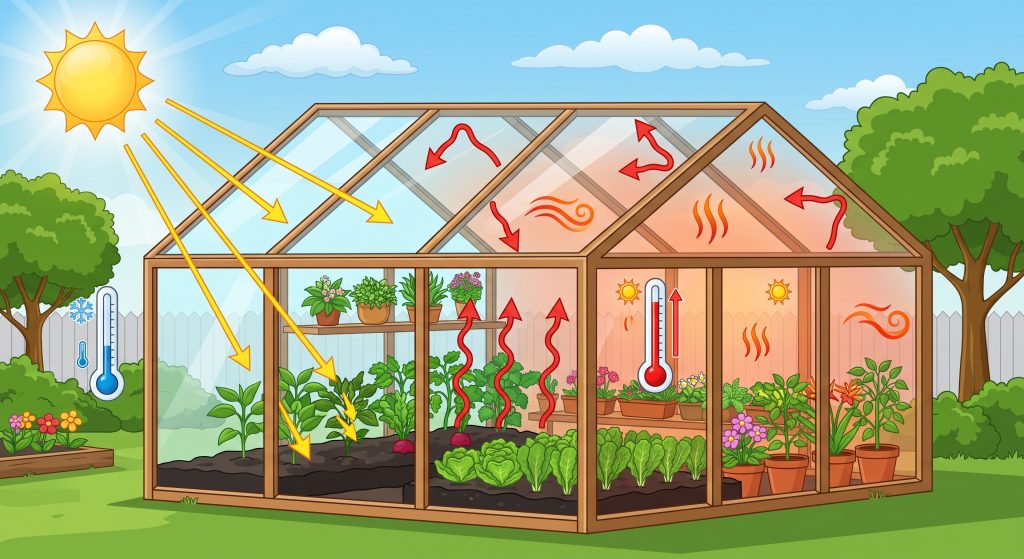
The glass allows short waves in but doesn’t let long waves out, trapping the heat, as well as making sure the wavelengths that encourage photosynthesis in plants are maximised! Wood, also, does a great job of helping to keep the rays in and build the heat (which is why we make our range from them!)
Because the greenhouse is enclosed, much of this warm air remains trapped inside, allowing the internal temperature to become significantly warmer than the outside environment. This warmer climate creates ideal growing conditions, particularly during spring, autumn and cooler summer days. On bright sunny days, temperatures can rise quickly, which is why good ventilation is essential to prevent overheating.
Why is Ventilation So Important?
While retaining warmth is one of a greenhouse’s biggest advantages, plants also need fresh air to remain healthy.
Opening roof vents, windows or doors allows hot air to escape and cooler air to circulate. This helps regulate temperatures, reduces humidity and lowers the risk of mould, mildew and fungal diseases developing. Good airflow also encourages stronger plant growth and improves pollination for many crops.
Many gardeners install automatic roof vent openers, which react to temperature changes and open without the need for electricity, helping maintain consistent growing conditions even when you’re away from home. Luckily for you, if you get a Dunster House Greenhouse, you’ll have the vents already installed for you!
What Can You Grow in a Greenhouse?
Well, now you know how it works, you might be asking what you can grow. One of the biggest benefits of owning a greenhouse is the huge variety of plants you can grow.
Popular greenhouse crops include:
- Tomatoes
- Chillies and peppers
- Lettuce and salad leaves
- Seedlings and young plants
- Bedding plants and flowers
A greenhouse also allows you to start seeds earlier in the year, overwinter more delicate plants and enjoy a longer growing season than traditional outdoor gardening. If you’d like some help planning your year, we have a guide answering what to grow in a greenhouse to get you started!
 Back to blog